

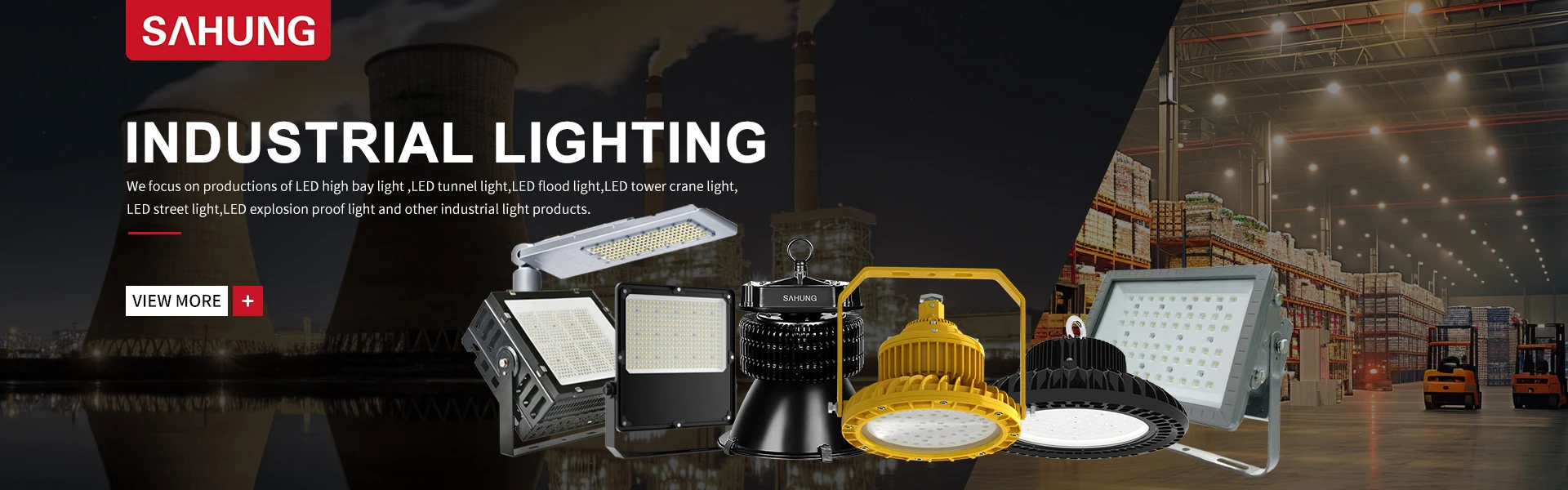
LED tunnel lights are energy-efficient fixtures that utilize light-emitting diodes (LEDs) as their light source. They offer high luminous efficacy and a long lifespan, and can be adapted for various lighting purposes through the use of different reflectors. The light output is softened to prevent glare or other forms of visual discomfort. The ballast incorporates overheat protection technology to ensure the fixture's longevity. The reflectors are made from imported, high-purity, anodized specular aluminum and feature precision optical design; the system boasts a power factor exceeding 0.9, high reflection efficiency, excellent light transmission, and eco-friendly energy savings.
Comparison between LEDs and traditional tunnel lighting sources: LEDs are solid-state semiconductor devices that convert electricity directly into light. Compared to traditional road and tunnel lighting sources (such as sodium lamps and metal-halide lamps), LEDs offer the following advantages:
(1) Low light decay: Under good heat dissipation conditions, LED light output remains stable; the decay rate is 3%–10% over the first 10,000 hours and approximately 30% over 50,000 hours-figures far lower than those of conventional road lighting sources.
(2) High color rendering: LEDs typically have a color rendering index (CRI) of 70–80 (or higher when using tri-phosphor coatings), whereas high-pressure sodium lamps generally range from 20 to 35, and low-pressure sodium lamps are even lower. Consequently, even if traditional light sources appear brighter than LEDs, the actual visual clarity provided by LEDs is superior. "Not necessarily the brightest, but offering the clearest visibility" represents a key direction for the development and application of LED lighting.
(3) Lifespan: LEDs have a longer lifespan than conventional road and tunnel lighting sources, typically exceeding 50,000 hours.
(4) Price: Although LED fixtures currently have a higher initial cost than traditional lighting, prices are dropping significantly as manufacturing technology matures. A standard high- or low-pressure sodium lamp setup typically costs around 2,000 RMB, and the associated costs for cables and auxiliary components are higher than those required for LED systems.