

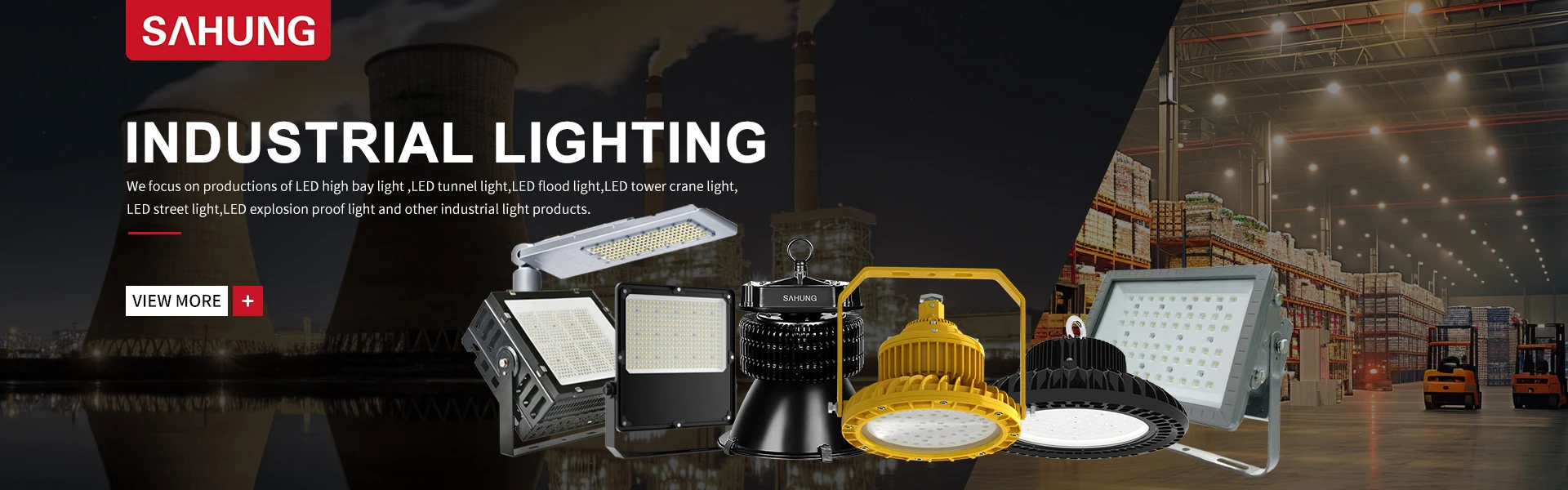
A key characteristic of LEDs used for lighting is their ability to emit light directionally; high-power LEDs are almost invariably equipped with reflectors that are significantly more efficient than standard luminaire reflectors. Furthermore, LED luminous efficacy measurements already account for the efficiency of their integrated reflectors. Roadway luminaires utilizing LEDs should capitalize on this directional emission capability: individual LEDs should direct light onto specific zones of the roadway, while the luminaire's reflector provides supplementary light distribution to achieve an optimal overall lighting pattern. To truly meet the illuminance and uniformity standards set by CJJ45-2006, CIE31, and CIE115, a luminaire ideally requires a three-stage light distribution system. LEDs equipped with reflectors and appropriate beam angles inherently provide effective primary light distribution. By designing the mounting position and emission angle of each LED relative to the luminaire's installation height and the roadway width, effective secondary light distribution can be achieved. In such luminaires, the reflector serves merely as a supplementary tertiary distribution element to ensure superior illuminance uniformity across the road surface.
In practical luminaire design, a spherical universal joint can be used to mount each LED, allowing for the adjustment of its emission direction. This flexibility ensures optimal illumination results regardless of the luminaire's installation height or the required width of the illuminated area. When determining the power and beam angle for each LED, calculations based on the inverse-square law-$E (\text{lx}) = I (\text{cd}) / D (\text{m})^2$-can be used to establish the required power for a chosen beam angle. Additionally, the light output of each LED can be fine-tuned to meet target values by adjusting the individual LED's power or by varying the power delivered by the driver circuit. These adjustment methods are unique to LED-based roadway luminaires; fully leveraging these characteristics allows for reduced lighting power density while still meeting roadway illuminance and uniformity standards, thereby achieving energy conservation goals.
